Graduating into Uncertainty: College Seniors in the Age of AI
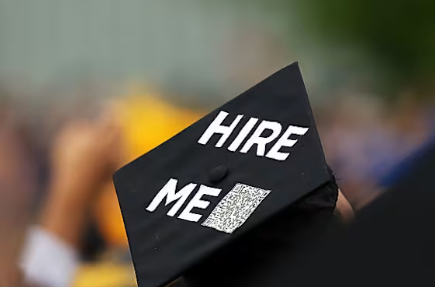
At a Christmas gathering with a few close friends, our conversation eventually turned to our children — most of them college seniors who will graduate next May. While the mood was festive, a shared concern quickly surfaced: the job market. Many parents worried that their children, despite years of hard work and strong degrees, might face a more challenging job search than expected. The growing influence of artificial intelligence (AI) and a cooling hiring environment have left both students and parents uneasy about what lies ahead.
According to a recent Wall Street Journal report, many large employers are scaling back or even pausing hiring plans for 2026. Chris Layden, CEO of Kelly Services, described the current corporate mindset as one of “wait and see,” noting that companies are investing more in technology and automation rather than expanding their workforce. The national unemployment rate rose to 4.6% in November — the highest in four years — and growth in white-collar employment has slowed dramatically. Even major firms like Amazon, Verizon, Target, and UPS have cut professional roles in recent months.
Federal Reserve Governor Christopher Waller noted that when he speaks to CEOs, many admit they’re delaying hiring decisions as they try to assess AI’s impact: which jobs can be replaced, and which ones can’t. In his words, “Everybody’s afraid for their jobs.” Across industries, employees are staying put; at IBM, voluntary resignations have dropped to their lowest level in 30 years. With fewer people leaving, there’s also less hiring — a trend confirmed by executives from companies like Shopify and Wells Fargo, who said they don’t expect to increase headcount next year and are instead retraining and optimizing through AI-driven efficiencies.
Economists add that well-paying, white-collar sectors such as software, data analytics, marketing, and entertainment remain among the weakest for new job openings. In contrast, hiring in healthcare and construction continues to show strength. Projections suggest unemployment may hover around 4.6% through 2026, signaling a slow recovery for graduates entering the workforce.
For parents and students alike, this new landscape may require a shift in perspective. The next generation will need to be agile — willing to learn continuously, integrate technology into their skillsets, and pivot when industries evolve. While the AI-driven transformation brings uncertainty, it also offers opportunities for those ready to adapt, think creatively, and provide the human insight that machines still can’t replicate.
Note: This article is intended for informational purposes only and does not constitute tax advice. For personalized guidance, please consult a tax professional.