Japan’s Interest Rate Hike and the Yen Carry Trade
The Bank of Japan raised its policy rate to 1.0 percent on June 16, 2026. This is Japan’s highest interest rate in about 31 years.
For Japan, this is a major change. Japan had very low interest rates for a long time. Because of that, global investors often borrowed Japanese yen at low cost and invested that money in countries with higher interest rates, especially the United States.
This strategy is called the yen carry trade.
How the Yen Carry Trade Works
The idea is simple.
Investors borrow yen at a low interest rate.
They convert the yen into U.S. dollars.
They invest the dollars in assets that pay higher interest.
They try to make money from the difference.
For example, if an investor borrows yen at 1 percent and invests in U.S. dollar assets earning 4 percent, the investor may earn about a 3 percent interest rate spread.
But this trade has a major risk.
Currency risk.
Understanding USD/JPY
If USD/JPY is 160, it means:
$1 = ¥160
If USD/JPY goes from 160 to 165, the yen is weaker.
If USD/JPY goes from 160 to 150, the yen is stronger.
A weaker yen helps the carry trade because investors borrowed yen and need to repay yen later.
A stronger yen hurts the carry trade because investors must buy back yen at a higher cost.
Simple Example
Assume an investor borrows ¥160,000,000 when USD/JPY is 160.
That equals $1,000,000.
The investor invests the $1,000,000 in U.S. assets earning 4 percent.
If Japan’s borrowing cost is 1 percent, the investor may earn about $30,000 from the interest rate difference.
But if the yen strengthens from 160 to 150, repaying ¥160,000,000 now costs about $1,066,667.
That creates a currency loss of about $66,667.
The interest profit disappears quickly.
This is why the yen carry trade can be dangerous.
Why the Yen Is Still Weak
Normally, when a country raises interest rates, its currency may strengthen.
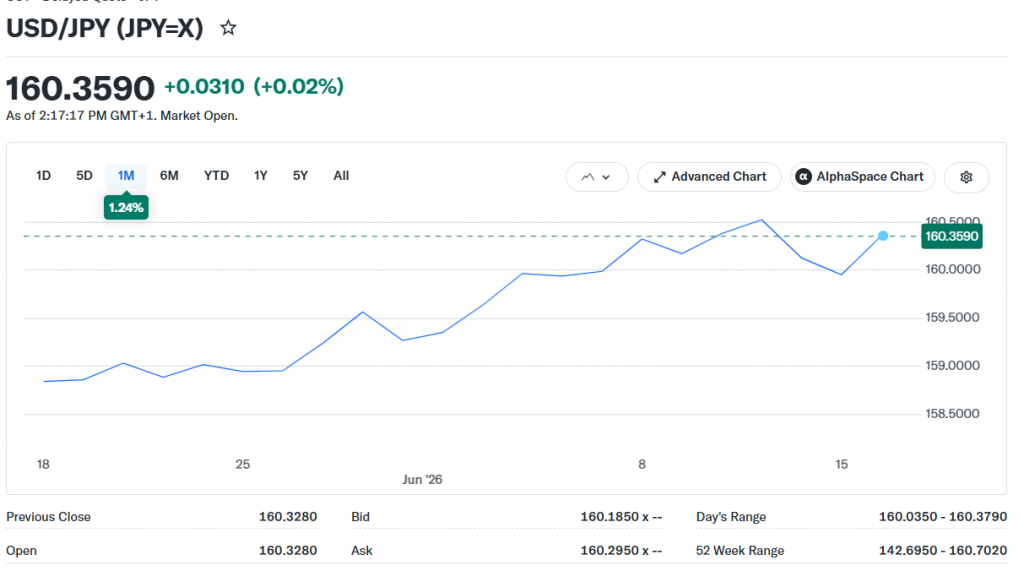
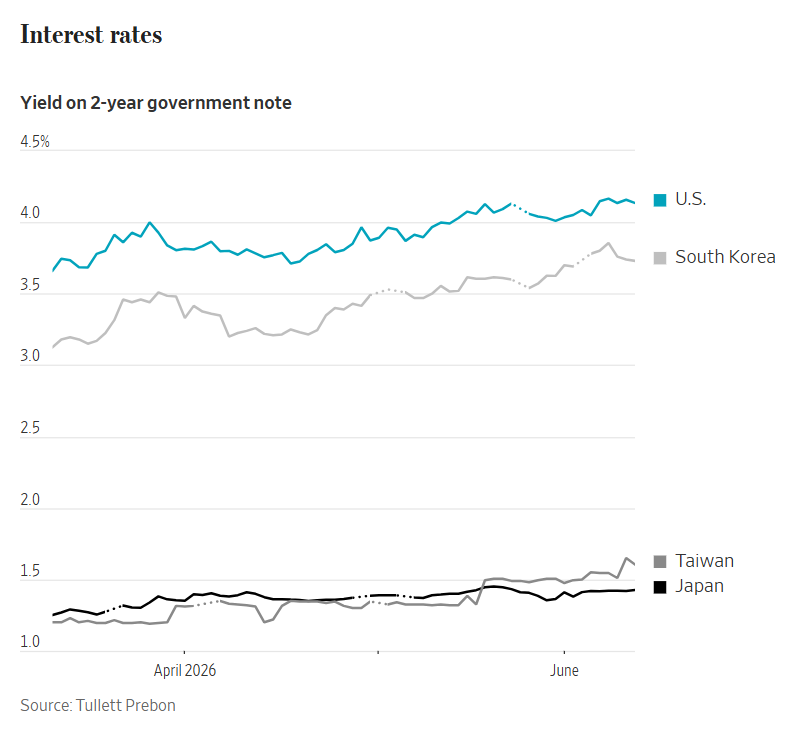
But the yen is still weak near ¥160 per dollar because Japan’s rate is still much lower than U.S. rates.
Japan: 1.0 percent
United States: about 3.50 percent to 3.75 percent
Because the interest rate gap is still large, many investors still believe the yen carry trade can work.
Why Japan Is Concerned
A weak yen makes imports more expensive.
Japan imports a lot of energy, food, and raw materials. When the yen weakens, Japanese consumers and businesses pay more for these imports.
That can increase inflation.
This is one reason the Bank of Japan raised rates.
But Japan has to be careful. If it raises rates too quickly, it may hurt business activity, employment, and economic growth.
The Risk of Intervention
Japan may also intervene in the currency market.
That means Japan’s government may buy yen and sell dollars to support the yen.
If that happens, the yen could strengthen suddenly.
For investors who are short yen, this can create large losses.
If many investors try to exit the yen carry trade at the same time, they all need to buy yen back. That can make the yen rise even faster.
This is called a carry trade unwind.
Bottom Line
Japan raised interest rates to 1.0 percent, but the yen carry trade is still alive because Japan’s rate is still much lower than U.S. rates.
The trade can make money when the yen stays weak.
But it can lose money very quickly if the yen strengthens.
The lesson is simple:
The yen carry trade is not just an interest rate trade.
It is also a currency bet.
A small interest rate profit can disappear quickly when the currency moves against you.
Note: This article is intended for informational purposes only and does not constitute tax advice. For personalized guidance, please consult a tax professional.